





Eye For Film >> Movies >> The Red Hangar (2026) Film Review


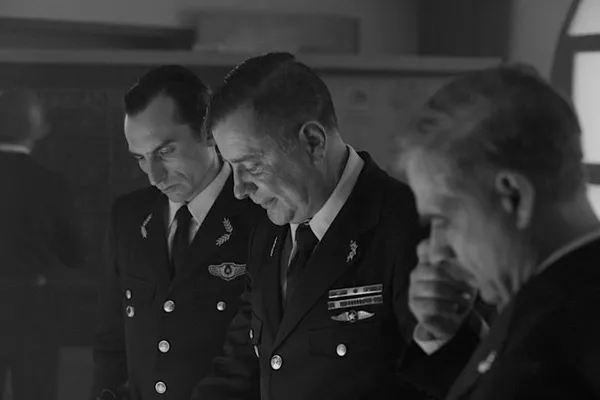

Juan Pablo Sallato’s fiction-feature debut The Red Hangar, based on Fernando Villagrán’s Disparen a la Bandada, opens like a bureaucratic nightmare with a uniform pressed to perfection. Set in Santiago on September 11, 1973, the day Chile’s US-backed coup ruptures civilian rule, it tracks Air Force captain Jorge Silva (Nicolás Zárate) through a single, tightening day of orders, corridors and silences that keep reclassifying what “duty” means in real time. It is less a battlefield account than an inward spiral, a political thriller staged as a character study of a man who follows procedure so faithfully until the system’s lexicon quietly swaps duty for brutality.
An Air Force legend, Silva is reassigned to train cadets at the Air Force Academy, as if the institution wants him visible but irrelevant. Then the coup spreads, and the state’s language shifts into pure command. He receives an order that turns the Academy into a detention and torture centre. The horror, in Sallato’s conception, is that the apparatus is not yet fully assembled. You watch it being built, step by administrative step, with men persuading themselves that compliance is neutrality. The story’s sting comes from how quickly “temporary measures” begin to sound like a moral category.

Sallato threads through Silva’s day a private counter-image, a memory of total freedom: a skydive into a stadium before a soccer match, a body falling cleanly through air, untouched by hierarchy. The recollection has the simplicity of an advertisement. It becomes the one place where the character can imagine a self not defined by rank. Old rivalries return with new impunity. Loyalty becomes a trapdoor question. Is it allegiance to a country, to a chain of command, or to the version of yourself you want to believe existed before you were asked to choose sides?
Shot in stark black-and-white, Luis Emilio Guzmán’s script builds its pressure through texture and restraint. Sallato’s camera is confident and unshowy, moving through institutional spaces where the unsaid does most of the damage. Doors close, footsteps echo, paperwork circulates with the calm of routine. The atmosphere is oppressive without relying on spectacle, which fits the premise of watching repression take its first “reasonable” steps.
The problem is that the narrative, at a brisk 81 minutes, often feels too thin for what it wants to carry. The historical moment is enormous, but Sallato largely keeps it offscreen, which can be a smart choice when the goal is intimacy. Still, intimacy needs density. Here, the central dilemma is clear early on, and the plot does not complicate it enough to generate discovery ending up caught between modes. It is not expansive enough to stand as a historical drama on its own terms, and not layered enough to become a fully evolving portrait of compromise. You can admire the control while also sensing that the story is moving on rails.
Performances help anchor that control. Nicolás Zárate gives Silva a contained, inward presence, the kind of face that can read as principled one moment and self-protective the next. He makes the character’s obedience feel less like villainy than like a learned reflex, which is where the discomfort lives. The supporting cast, including Marcial Tagle, playing the coup strongman Colonel Jahn, and Boris Quercia, Colonel Soler, supply the institutional friction around him, the mixture of menace and banality that makes authoritarianism feel like office culture with weapons.
What lingers is Sallato’s core observation. In a violent overthrow, logic dissipates and entropy takes over, but the paperwork still gets stamped. The Red Hangar is strongest when it trusts that paradox, when it shows how terror can begin as policy and how, even inside a chain of command, a soldier can step outside the gravity of harmful rule-following. It may not fully deepen its premise, yet it leaves an aftertaste that is hard to dismiss, the recognition that history’s machinery is often operated by people who insist they are only doing their job, and that those who fall out of line can pay for it in exile or imprisonment while still making an enormous difference. In the end, The Red Hangar insists that loyalty is never a stable virtue in a coup. It is either your interpretation of your pledge of allegiance, or your superiors’ misinterpretation of it for their own ends, and the difference can decide who lives, who disappears, and who gets to call it duty.
Reviewed on: 13 Feb 2026


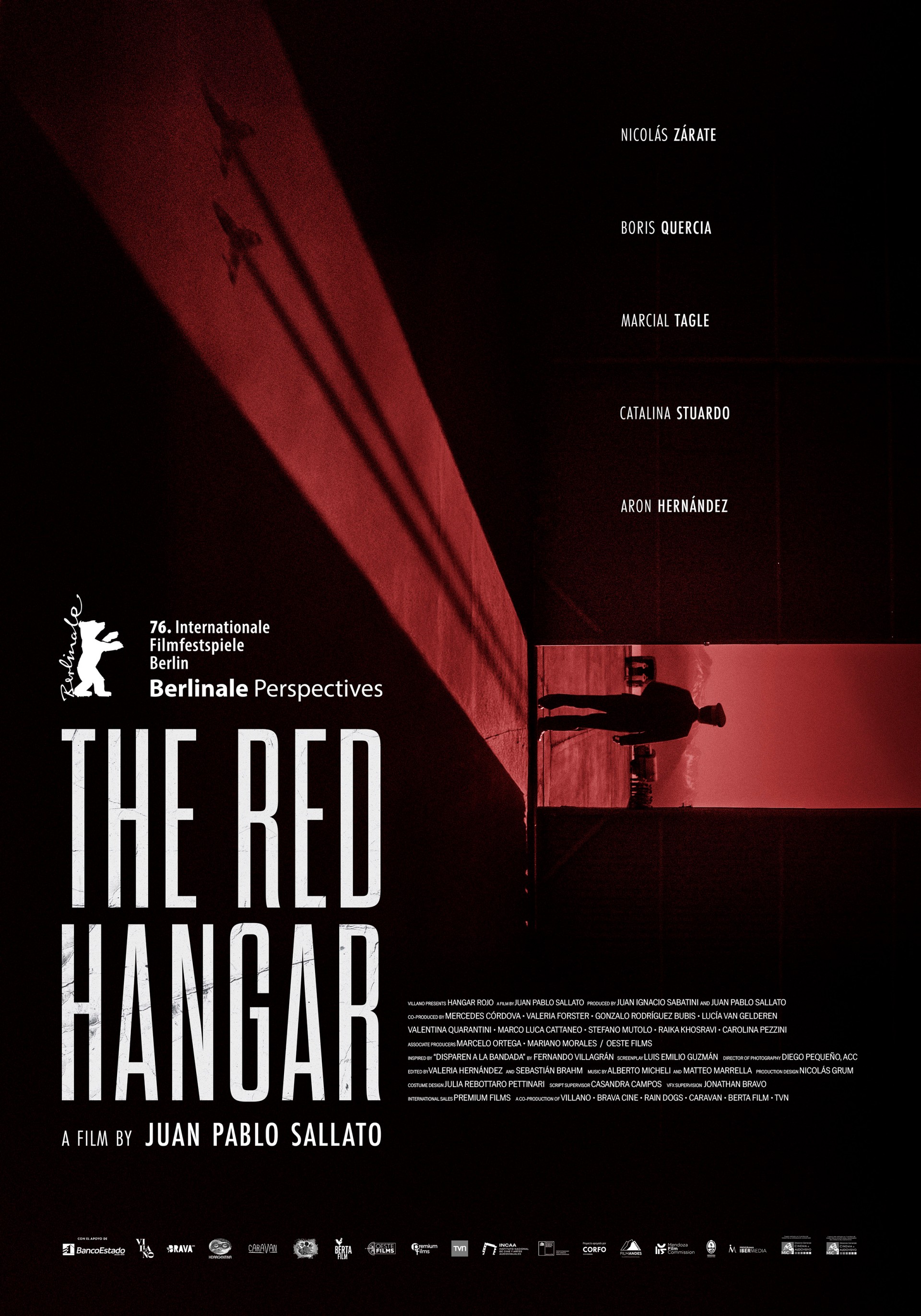
Director: Juan Pablo Sallato
Writer: Luis Emilio Guzmán
Starring: Nicolás Zárate, Boris Quercia, Marcial Tagle, Catalina Stuardo, Arón Hernández
Year: 2026
Runtime: 81 minutes
Country: Chile, Argentina, Italy
Festivals:
Search database:
